Prefab vs. Site-Built ADUs in California: What to Know
Before choosing an ADU design, it helps to understand how the home will actually be built. In California, most backyard homes fall into one of two categories: factory-built prefab construction or traditional site-built (stick-built) construction. While the finished homes may look similar, the building process behind them is very different.
Understanding these differences can help homeowners decide which option fits their property, timeline, and long-term goals. For many accessory dwelling unit (ADU), single-family detached (SFD), and multi-family (MF) projects, prefab construction offers advantages in efficiency, durability, and scheduling.
Perpetual Homes ADU works with homeowners across California as a full-service prefab home builder, guiding clients through design, permitting, manufacturing, and installation.
Factory-Built vs. Site-Built Housing Defined
According to the California Department of Housing and Community Development (HCD), Factory-Built Housing (FBH) refers to housing components that are constructed in a factory and transported to the building site for installation. These structures must comply with the California Building Standards Code, the same code used for traditional residential construction.
Factory-built housing differs from manufactured housing, which is built under federal HUD standards and typically installed in manufactured home communities.
Site-Built Homes are constructed entirely at the property where the home will stand. Every building component, including lumber, fasteners, and finishing materials, is delivered to the site and assembled outdoors.

While both methods can produce high-quality homes, the construction environment and workflow are very different.
What Is Prefab Construction?
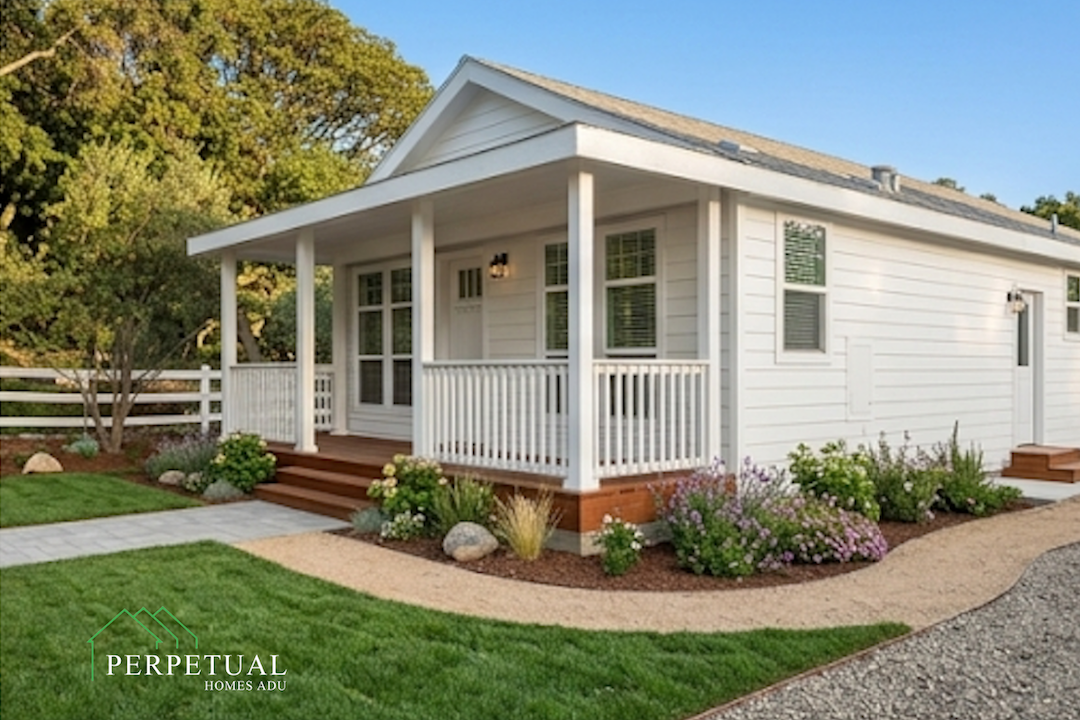
A prefab or factory-built home is largely constructed inside a factory before being delivered to the property. After the structural framework is completed, much of the interior work is also finished indoors, including walls, cabinetry, flooring, plumbing, and electrical systems.
Once the sections arrive at the property, they are placed on a prepared foundation and assembled. Builders then connect utilities and complete any final finishing work.
One of the key advantages of prefab construction is the ability to move multiple parts of the project forward at the same time. Because the home is built in the factory while the property is being prepared, the overall timeline can be significantly reduced. Katherine Anderson, founder of Perpetual Homes, explains, “When the home is being built in the factory while the site work is happening at the same time, it creates a much more efficient process for homeowners.
That efficiency also extends to inspections. Much of the construction is reviewed during the factory build, which means fewer on-site inspections are required, typically around 3. As Anderson notes, “This helps keep the project moving forward with fewer delays, and in many cases, can reduce overall construction time by up to 40% compared to traditional building methods.”
Prefab homes are also engineered to withstand transport from the factory to the property, which can result in strong structural framing once installed.
What Is a Site-Built (Stick-Built) Home?
A site-built home, often called stick-built construction, follows the traditional method most people are familiar with. The home is built piece-by-piece outdoors, beginning with the foundation and continuing through framing, roofing, utilities, insulation, and interior finishing.
Because construction takes place outside, materials such as lumber and drywall may be exposed to weather conditions during much of the building process.
Potential Drawbacks of Site-Built Construction
Traditional site-built construction is still widely used, but it can come with a few challenges compared to factory-built homes. Because the house is built outdoors, materials are often exposed to the weather during much of the construction process. Rain or moisture can affect framing and other materials before the structure is fully enclosed.
Site-built projects also tend to take longer. Each stage of construction happens one step at a time, and delays can occur if weather conditions change, materials arrive late, or subcontractor schedules shift. As a result, timelines can be less predictable, which can make it harder for homeowners to know exactly when their project will be finished.
The Future of Homebuilding is Prefab
Homebuilding is evolving, and prefab is leading the way. Offering high-quality homes at an affordable price.
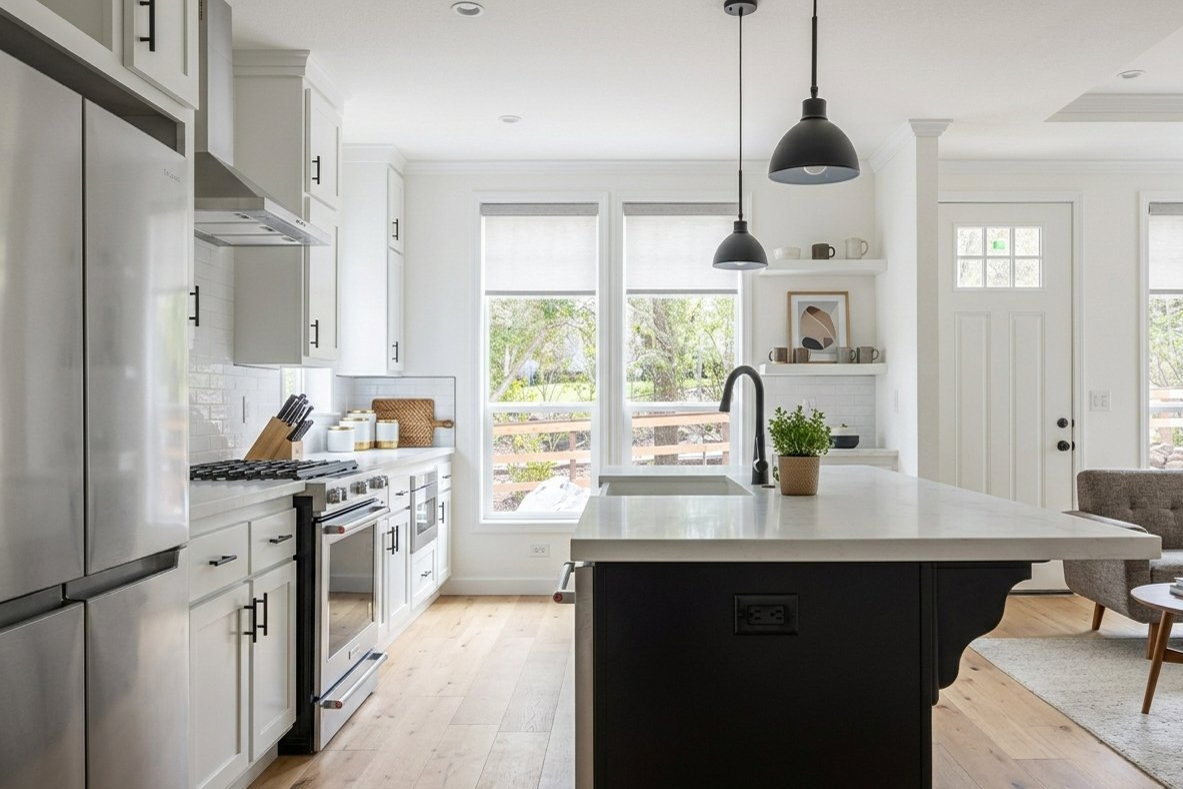
At Perpetual Homes, our factory-built, wood-framed prefab homes combine durability, speed, and design flexibility. From ADUs to multi-family and single-family projects, prefab lets you build smarter, faster, and with more confidence:
Faster Timeline: Factory construction and site preparation happen simultaneously to reduce delays.
Built Indoors for Quality: Constructed in a controlled factory environment, protected from weather and moisture.
Durable Materials: Precision-built with consistent quality and long-term performance in mind.
Lower Environmental Impact: Efficient material use and reduced waste.
Customized Design Options: Flexible, highly customizable ADU and single-family detached (SFD) home designs with floor plans, layouts, and finishes tailored to your vision.
Streamlined Inspections: Fewer on-site inspections compared to traditional construction due to factory-based building.
Factory construction can also improve efficiency and reduce waste. As William Anderson, Project Manager at Perpetual Homes, the state’s largest private ADU builder, explains, “Our building process incorporates sustainable practices such as engineered lumber for efficient material use, low-VOC adhesives and paints, formaldehyde-free insulation, and systems designed to reuse or recycle a large portion of construction waste.” These practices support both building performance and healthier indoor environments.
Perpetual Homes ADU: A Full-Service Prefab Builder
Perpetual Homes ADU helps California homeowners navigate the entire process, including property evaluation, design, prefab manufacturing, installation, and project coordination for ADUs, single-family homes, and multi-family projects.
The team focuses on helping homeowners create flexible backyard housing for multigenerational living, rental income, or long-term housing solutions. Prefab construction plays a central role in that approach, offering a building method that combines efficiency, durability, and consistent construction quality.
Exploring Your ADU & SFD Home Options
Choosing between prefab and site-built construction depends on your property, timeline, and overall goals. For many homeowners, prefab construction offers clear advantages, especially when looking for a faster timeline, streamlined construction, and more predictable outcomes.
If you’re exploring adding an ADU or building a single-family home, learning more about prefab construction is a good place to start. The team at Perpetual Homes ADU can walk you through your options, answer questions, and help you determine the best path forward for your property.
Sources and References:
California State Board of Equalization: https://www.boe.ca.gov
California Proposition 13: https://assessor.lacounty.gov/real-estate-toolkit/proposition-13
IRS Energy Efficient Home Improvement Credit: https://www.irs.gov/credits-deductions/energy-efficient-home-improvement-credit
RenoFi ADU Financing Information: https://www.renofi.com
Perpetual Homes ADU Planning Process: https://www.perpetualhomesadu.com/10-step-process-details/step%205
Perpetual Homes ADU Financing Page: https://www.perpetualhomesadu.com/financing
Better Business Bureau: https://www.bbb.org
Perpetual Homes BBB Listing: https://www.bbb.org/us/ca/danville/profile/accessory-dwelling-unit-adu-builder/perpetual-homes-adu-1116-970151/#sealclick
Disclaimer: This article is intended for general informational purposes only and does not constitute legal, financial, tax, or construction advice. ADU regulations, costs, and building requirements may vary by location and property conditions. Homeowners should consult with licensed professionals and local planning authorities to confirm current requirements. For questions about building a prefab ADU, you may also contact the Perpetual Homes ADU team for a consultation.