
Is Your California Backyard Ready for an ADU? Zoning, Lot Size, and Access Explained
Interest in Accessory Dwelling Units continues to grow across California, but one of the first questions homeowners ask is: “Can my property actually support an ADU?”
The answer depends less on design preferences and more on property factors like zoning, lot size, access, utilities, and fire requirements. Understanding these aspects early can save time, prevent redesigns, and make the planning process more predictable and enjoyable.
This guide shares core property considerations that determine ADU feasibility and explains how working with Perpetual Homes ADU can help homeowners evaluate their property before moving into design conversations.
Start with Zoning: State Law Sets the Baseline
Every ADU product begins with zoning. California has established statewide ADU standards through legislation designed to increase housing availability. However, local jurisdictions can still play a role in how those standards are applied.
Under state law, most single-family and multifamily residential properties are eligible for at least one ADU, and in many cases more. While local codes affect details like setbacks, height limits, and parking, they cannot prohibit ADUs that meet state requirements. This is why reviewing both state standards and local zoning together matters.
“Local barriers to construction are systematically being removed to make it easier and more flexible for property owners to create additional housing,” says Katherine Anderson, Perpetual Homes founder and managing partner.
In cities like Sonoma, Santa Rosa, Danville, and Sebastopol, local planning departments apply state ADU law a little differently. Reviewing statewide standards through the California Department of Housing and Community Development (HCD) ADU Handbook and local planning department websites, then clarifying how those standards are implemented at the city or county level.
Lot Size: Smaller Lots Can Still Work
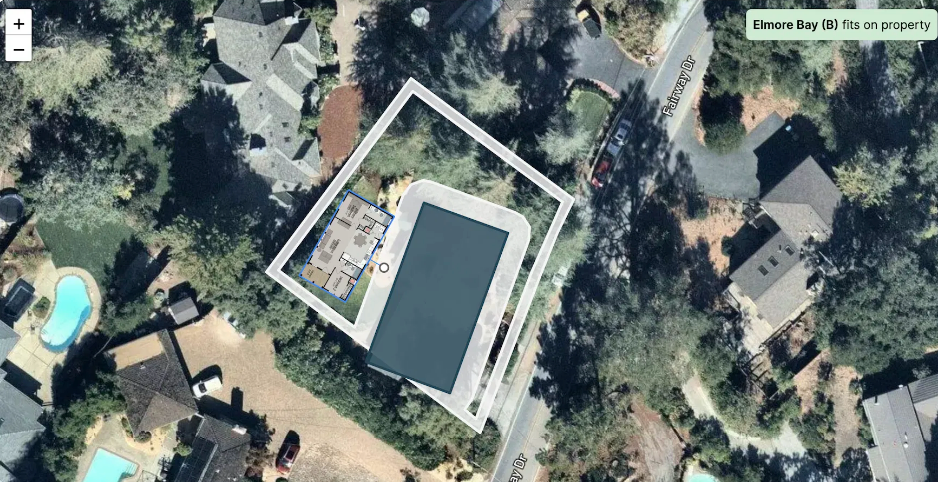
There is no universal minimum lot size for ADUs under California law. What matters is whether the unit can meet objective standards like setbacks, height, and access.
Lot shape, slope, existing structures, and utility locations often matter more than total square footage. Many smaller lots can support:
- Detached backyard ADUs
- Attached ADUs
- Garage or accessory structure conversions
Early evaluation helps set realistic expectations before design decisions are made.
Access, Utilities, and Fire Requirements
Getting from the street to the ADU matters more than most people expect. Fire departments need a clear access path, and that same path often determines how utilities are brought in and how construction equipment reaches the site.
If access is limited, even a well-planned ADU may need changes later in the process. Looking at this early helps prevent delays during permitting.
ADUs also need standard utility connections for water, sewer, gas, and electricity. Fire safety rules, set by local fire departments, can affect building materials, spacing from existing structures, and emergency access. These details vary by location, so it’s best to review them before design work begins.
Using the Perpetual Homes 10-Step Process
To simplify early planning, Perpetual Homes offers an easy 10-Step ADU Process that guides homeowners from initial feasibility through construction and delivery. This process is designed to find any constraints there might be early, so homeowners can make informed decisions with clarity.
Why Early Property Review Matters
The biggest advantage of working with Perpetual Homes ADU at the beginning is certainty. During our Complimentary 30-minute Virtual Assessment, a team member will help homeowners assess their property by reviewing zoning and overlays so that the ADU model that best fits their space, goals, and budget.
This step is important because a smart evaluation prevents false starts, wasted time, and designs that don’t fit your lot, budget, or goals.
Instead of asking “Can we make this work?” late in the process, homeowners start with a clear understanding of what to expect from day one.
Is Your Lot Ready?
If you are asking, “Can my property support an ADU?” you are already on the right path. Reviewing these basics is the smartest way to move forward with confidence. Contact Perpetual Homes ADU to review your property and understand your options.